Choosing a sauna starts with more than deciding which model looks best. Where the sauna will be installed, how many people will use it, the type of sauna experience you prefer and the technical possibilities of the space all influence the right choice.
For some homes, a compact indoor sauna is the natural solution. Others have the space for a dedicated outdoor sauna, while a custom-made sauna may be the better option when the room or project has specific requirements.
This guide covers the main decisions to consider before choosing a sauna for your home.
What should you consider when choosing a sauna?
Before comparing individual models, start with five questions:
- Will the sauna be indoors or outdoors?
- How many people will normally use it?
- What type of sauna experience do you prefer?
- How much space is available?
- Do you want a ready-designed model or a sauna made specifically for your space?
Answering these questions will quickly narrow down the options.
Indoor or outdoor sauna?
One of the first decisions is where the sauna will be installed.
Indoor sauna
An indoor sauna becomes part of the existing home or wellness area. It can work particularly well when you have a suitable bathroom, basement, ensuite or dedicated wellness space.
The available room determines much of the design, including the sauna dimensions, bench layout and technical solution.
When standard dimensions do not suit the space, a custom-made indoor sauna can be designed around the room rather than requiring the room to fit a predefined sauna.
Outdoor sauna
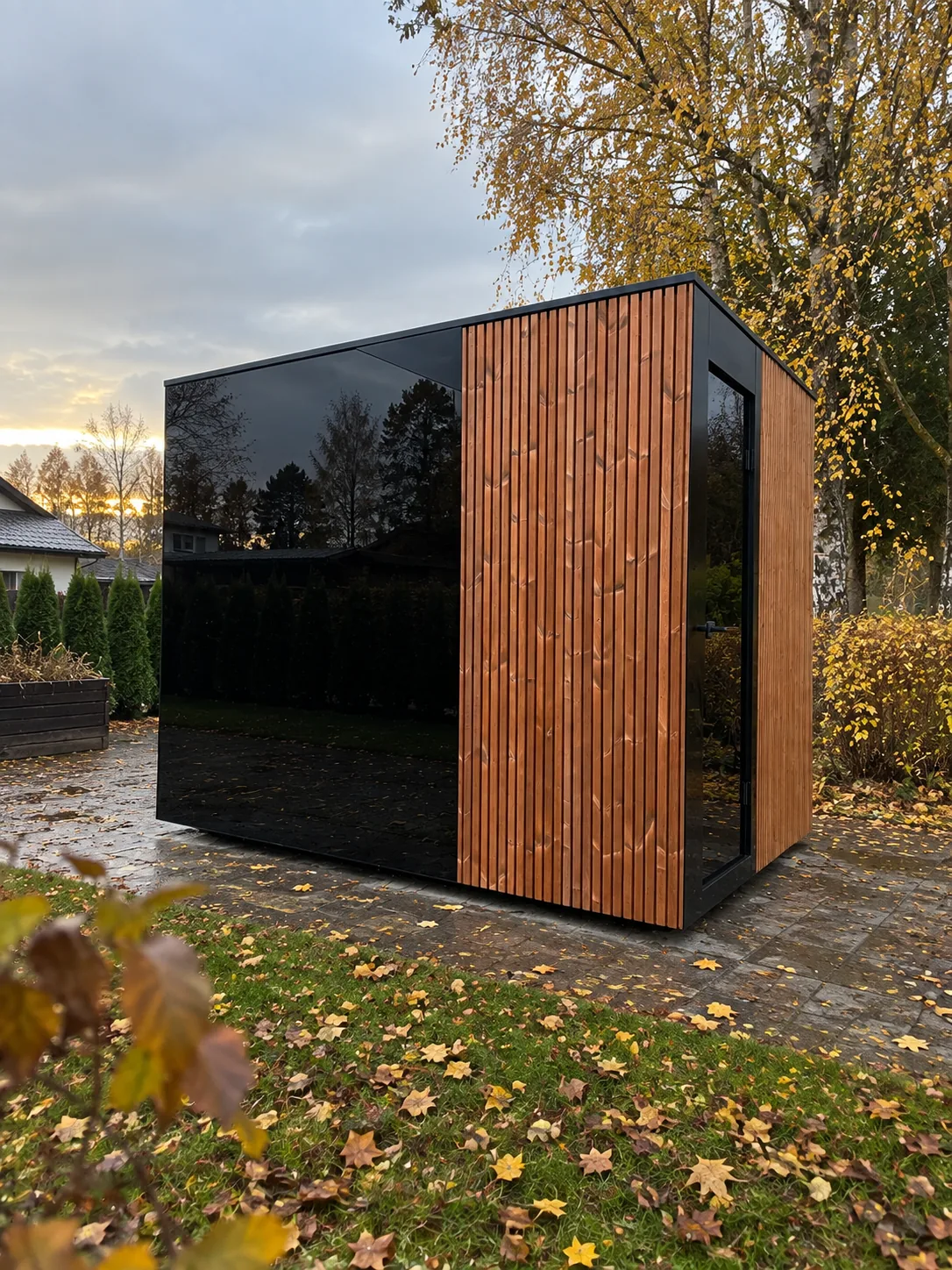
An outdoor sauna creates a separate wellness space in the garden or elsewhere on the property.
It can be a good choice when indoor space is limited or when you simply prefer the experience of leaving the house and having a dedicated place for sauna.
Nordik Wellness outdoor saunas are designed for year-round use, including Nordic winter conditions, so the sauna can remain part of everyday life throughout the seasons.
Explore our sauna collection to compare the available outdoor models and other sauna solutions.
How big should your sauna be?
The right sauna is not necessarily the largest one you can fit.
Start by considering how many people will normally use it. A sauna intended mainly for one or two people has different space requirements from one designed for family use or larger groups.
It is also important to consider how the interior space is used. Bench dimensions and layout influence comfort just as much as the overall footprint of the sauna.
For ready-designed models, check the stated dimensions and capacity before choosing. For custom projects, the layout can instead be developed around the available room.
Which type of sauna is right for you?
Not every sauna provides the same experience.
Traditional sauna
A traditional sauna uses a heater and sauna stones to create the familiar high-temperature sauna environment. Water can be poured onto the heated stones to create steam and temporarily increase humidity.
For many people, this is the sauna experience they already know and want at home.
Hybrid sauna
A hybrid sauna provides more flexibility within one cabin.
The Nordik Wellness Hybrid Sauna combines traditional Finnish sauna heat and infrared technology in a single sauna, allowing you to choose between different sauna experiences depending on your preference.
Steam room
A steam room provides a different environment, with high humidity and warm steam rather than the hotter, drier conditions associated with a traditional sauna.
Nordik Wellness also creates custom-made indoor steam rooms designed around the available space and interior.
Ready-designed or custom-made sauna?
A ready-designed sauna model is a straightforward choice when its dimensions, capacity and design suit your property.
Nordik Wellness offers several established sauna models, including the Signature and KUUT ranges. Each has defined dimensions and design characteristics, making it easier to compare the options before starting a project.
A custom-made sauna makes more sense when the sauna needs to fit an existing room, unusual dimensions or a particular interior concept.
Neither approach is inherently better. The right choice depends on the space and what you want from it.
What should you know about sauna heating?
Heating should be considered during the planning stage rather than after the sauna has already been designed.
The appropriate solution depends on the sauna itself, its size, construction, location and available infrastructure.
Electric heating offers convenient control where the necessary electrical supply is available. Wood-burning heating requires additional considerations such as a suitable chimney or flue and the relevant installation requirements.
The heater also needs to be correctly sized for the sauna. Room volume, construction and larger glass or less insulated surfaces can affect the heating requirement.
We cover this topic in more detail in our guide to wood-burning vs electric sauna heaters.
Can you use an outdoor sauna all year?
A well-designed outdoor sauna does not need to be a summer-only space.
Nordik Wellness outdoor saunas are created for year-round use and Nordic conditions, including the colder winter months.
For an outdoor sauna, the overall construction and installation environment matter alongside the sauna itself. The location should therefore be considered as part of the project from the beginning.
Where should you place an outdoor sauna?
The best location depends on the property.
Consider:
Access. The sauna should be practical to reach from the house throughout the year.
Privacy. Think about views from neighbouring properties and surrounding areas.
Ground and installation. The selected location needs to be suitable for the particular sauna and its installation requirements.
Utilities. Electrical and other technical requirements should be considered before finalising the location.
The surroundings. A sauna can become an architectural part of the garden rather than simply an additional structure.
Planning the location early can make both installation and everyday use easier.
What should you look for in sauna materials and construction?
A sauna is exposed to repeated changes in temperature and humidity, so material selection and construction quality matter.
Look beyond the exterior appearance and consider the complete build: interior materials, benches, glazing, insulation, ventilation and the way individual details are finished.
For an outdoor sauna, the exterior also needs to be appropriate for the conditions in which the sauna will be used.
Quality becomes particularly important when the sauna is intended for regular, year-round use.
See real sauna projects
Looking at completed projects can make it easier to understand what different sauna solutions look like in real spaces.
Explore Nordik Wellness completed projects for examples of outdoor saunas, indoor saunas and wellness spaces we have designed and built.
Choosing your sauna: a quick checklist
Before making a final decision, make sure you know:
- where the sauna will be installed;
- how many people will normally use it;
- which sauna experience you prefer;
- how much space is available;
- whether an existing model suits the project;
- what technical requirements need to be considered;
- and whether you want a ready-designed or custom-made solution.
You do not need to have every technical detail resolved before getting started. The important part is understanding the space and how you would like to use the sauna.
Find the right sauna for your space
A good sauna should suit both the property and the way you intend to use it.
Explore Nordik Wellness saunas to compare our outdoor, indoor, hybrid and custom-made solutions.
If you already have a space or project in mind, contact Nordik Wellness and tell us what you are planning. We respond within one business day.